











On a cold March morning in 1862, the Battle of Pea Ridge began near the Leetown hamlet. More than 160 years later, at NWACCs Spring Arts and Culture Festival, Chris Huggard revisited the battle and its lasting impact on the surrounding communities.
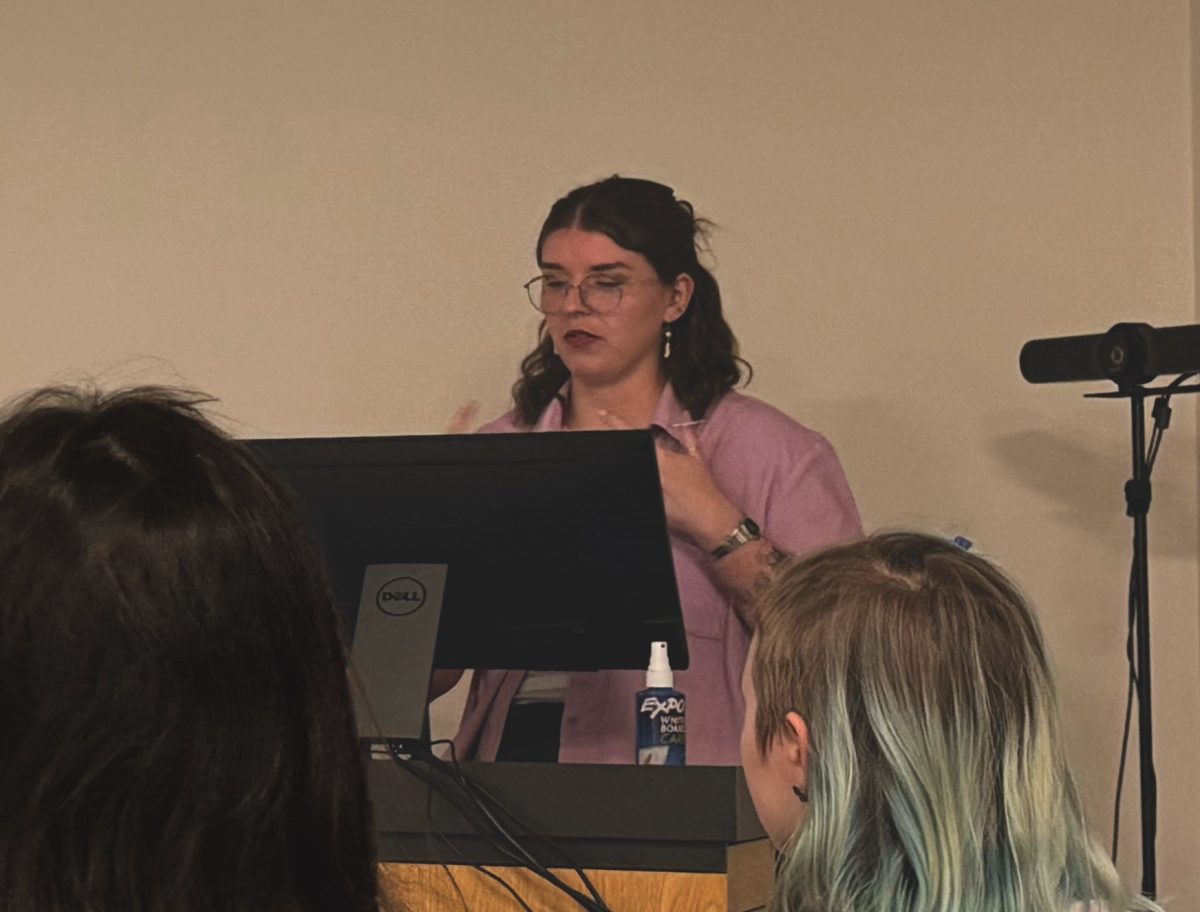
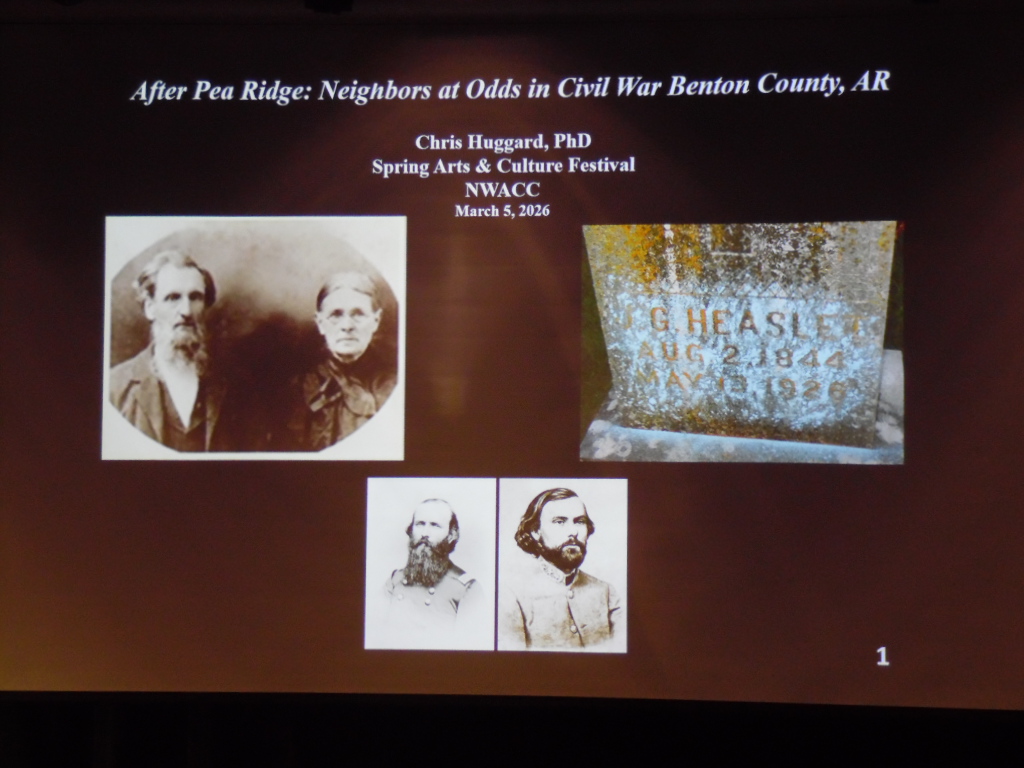
On March 5, Huggard, a history professor at NWACC, delivered a talk in White Auditorium titled, “After Pea Ridge: Neighbors at Odds in the Civil War.” During the presentation, Huggard focused on how the war affected families and communities in the surrounding areas. He highlighted the stories of John Ingall and the Heaslet brothers that revealed the divided loyalties and neighbor v. neighbor conflicts that broke out during and after the war.
During his presentation, Huggard drew from newspaper articles, family diaries, and accounts preserved by Nancy Miser Buttram in the Benton County Pioneer. He explained how these sources revealed connections and conflicts between families on opposing sides of the war.
At the beginning of his lecture, Huggard explained to the audience that his research on the Battle of Pea Ridge and the stories of the surrounding communities began by accident. Huggard told audience members that he had been granted a contract to write the history of the Civil War park, and that after he finished, he thought, “Someday, I’ll make it into a book.”
“I thought I would just do a chapter on the battle, do an environmental analysis of it, and then do a history of the park,” he said in an interview later. “Once I started getting into the research, I realized there was a lot of stuff that had not been written about.”
Huggard noted that the stories that have been written about the Battle of Pea Ridge don’t talk about the community around the battle, or about the park itself in anything more than references. During the interview, he specifically mentioned the book “The Battle of Pea Ridge” by William Shea and Earl Hess, which focuses mainly on the military history of the battle.
“They don’t really talk much at all about the community,” Huggard said. “They don’t talk about the settlement of the area. They don’t talk about the period after the battle or anything about the park, just references.”
After Huggard finished his talk, he invited three Civil War reenactors to the front of White Auditorium to give the audience an insight into the life of Civil War soldiers. Reenactors Joe Rainey, D. D. Dunagin, and Bob Underdown told attendees that many residents of north Arkansas didn’t actually own slaves, and that they didn’t want to fight for the Confederates.
“Arkansas raised more troops for the Union than any other southern state,” Rainey said.
Rainey and Dunagin showed the audience members how the soldiers in the Civil War would load a 1842 Smoothbore Musket and a 1855 Springfield. As part of their demonstration, Rainey explained how the soldiers would always fight in two ranks, shoulder to shoulder, with the shorter soldiers in the front rank.
At the end of the event, attendees were allowed to look at the model weapons and food rations that the reenactors brought with them and ask them questions. While talking to a small group of the students, Dunagin shared that he had a personal connection to the battles fought in the area, as a piece of land near Avoca where the Battle of Little Sugar Creek, also known as the Battle of Dunagin’s Farm, used to belong to his grandfather J. Dunagin.
Nadia Moutria was among the NWACC students who attended Huggard’s presentation. She said she enjoyed the presentation and learned some things about the region’s past. “I love history! I’m a history and sociology major, so it was up my alley,” she said. “I liked it whenever he told stories of the individuals who lived in the area. Like the little girl who snuck off to see the grave at Pea Ridge.”
Moutria also found it interesting that places like Pea Ridge and Bentonville had sub-colonies during the war. “They were union-protected spaces so farmers could live in somewhat peace,” she explained.
A surrounding place with some history behind it was Leetown, a small community that sat on a wooded plateau, with the Pea Vine Ridge settlement to the north and the Little Sugar Creek settlement to the south. During the Battle of Leetown, all houses within three miles of the battlefield were taken to be used for hospitals, placing the small village, which only laid a half-mile south of the federal battleline, directly in the path of the war and military operations.
Historical accounts show that the battle devastated the small community. Most families moved to the nearby settlement of Pea Ridge after the war had ended. The ones who stayed in Leetown after the war, ended up relocating to Rogers in 1881 after the installment of the “Frisco Line” railroad. The once thriving settlement slowly faded away, with the grave of two-year-old Robert Braden being the only remembrance of the village that once stood there.
NWACC student Aubre Floyd contributed to this report.