












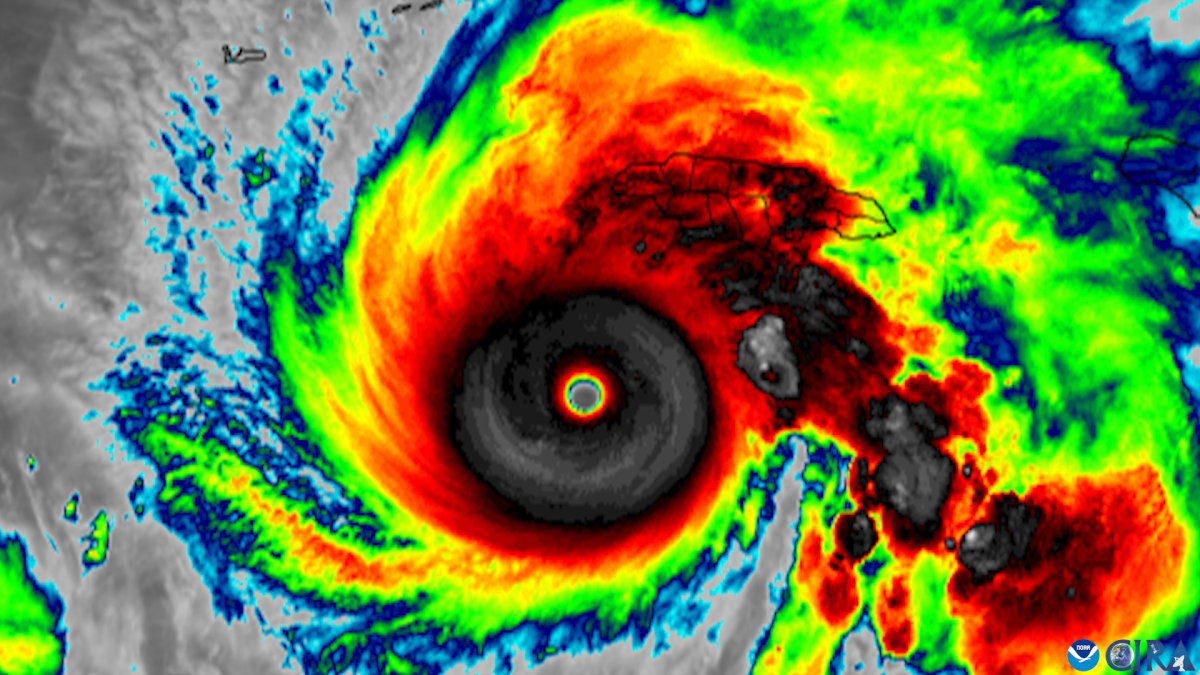
Hurricane Melissa ripped through the Caribbean on Oct. 28, leaving Jamaica, Haiti, and Cuba the hardest hit. The category 5 storm toppled buildings as it intensified with winds measuring up to 185 mph.
Melissa has left hundreds of people without homes throughout Jamaica, Cuba, and Haiti. According to NPR, Melissa left at least 14 people dead and more than 13,000 people in shelters in Jamaica. In Haiti, at least 30 people have died with many still missing as the death toll continues to rise in both countries.
Professor of Sociology and Haitian herself Yanick St. Jean, said, “Melissa is far from the last one [hurricane]…Lack of preparation for these storms is the problem. How do we prepare for what is likely to continue; that’s the key question.”
St. Jean mentioned that she didn’t know anyone that was affected, but that she felt deeply for her country. When asked about how the international community should respond she said, “Do not send money…more than likely, it will not get to the people who need it. Show respect for the history of the country [Haiti] and include it in the curricula.” She referenced the historical exclusion Haiti has faced from the international community.
According to CNN, Melissa has tied with four different hurricanes for the second strongest storm recorded in the Atlantic. Although not his specific background, Casey Brewster, Professor of Biology, said, “Climate change in general does predict a lot more extreme weather patterns, and that’s been documented in a lot of other things outside of hurricanes.”
These storms are likely to continue and could cause more devastation in the future for these countries. Brewster emphasized that because of this, “catastrophic weather events are and will continue to increase in quantity with the rapid pace of climate change – they are one more factor causing the loss of biodiversity on our planet.”
NPR reported that Melissa was a category 3 storm by the time it hit Cuba, but no deaths were reported after more than 735,000 people were evacuated before the storm made landfall. However, the destruction is vast with lost roofs, power lines and substantial losses in banana and coffee plantations.
Now, these countries are left to pick up the pieces and rebuild after this catastrophic damage. The UK has said they were sending £2.5 million in aid and China’s ambassador to Cuba shared a video on X showing boxes of aid.
According to the Department of State, U.S. President, Donald Trump authorized “an immediate U.S. response.” Now, volunteers from around the world have gone to give aid and help in cleanup efforts.