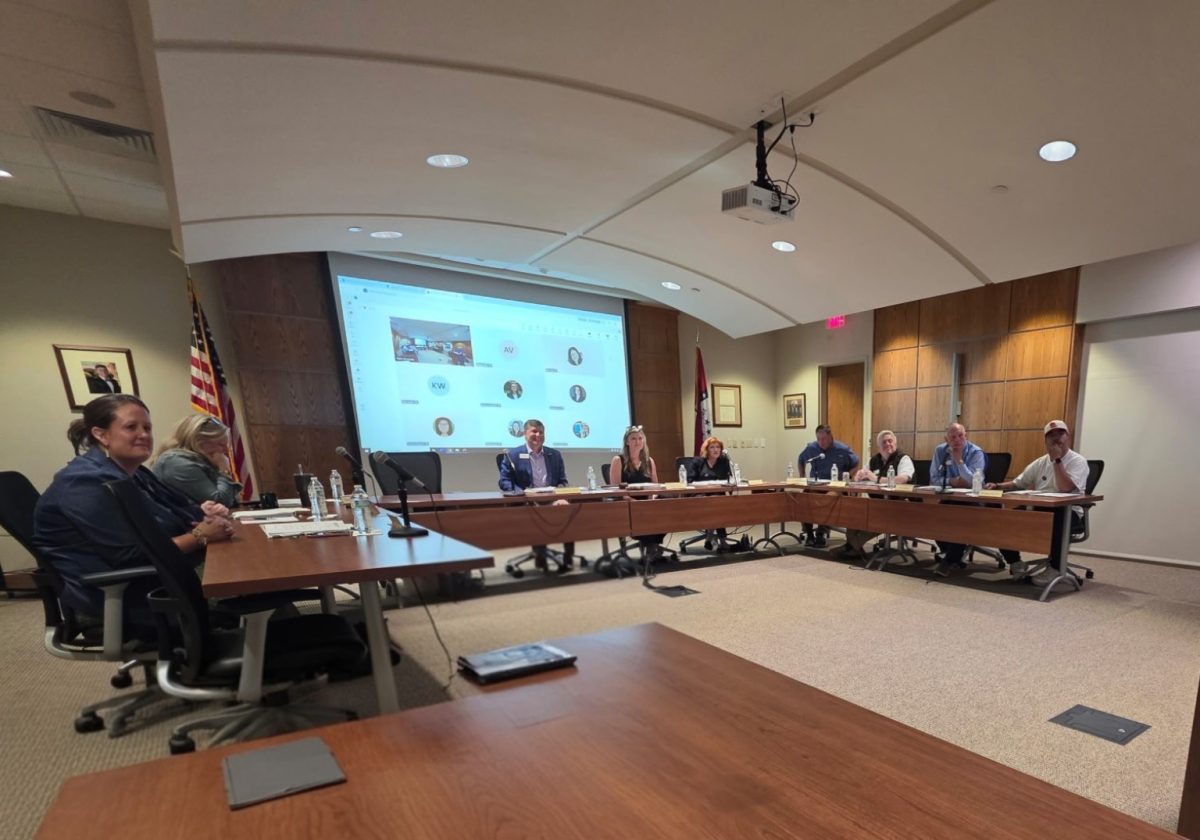

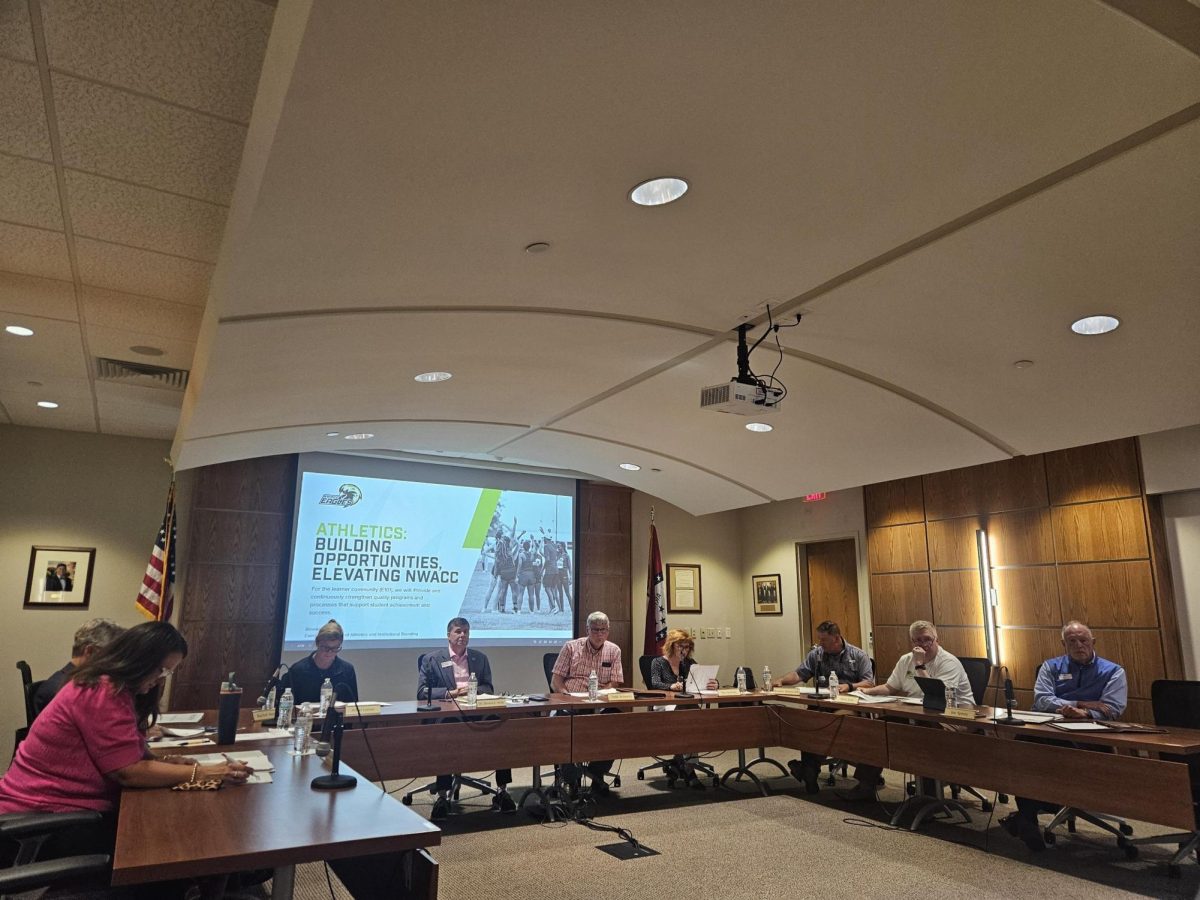














As NWACC expands athletics and considers student housing, trustees and college officials are facing a larger question: Is the college growing beyond its mission? That question came into focus during recent Board of Trustees discussions, where trustees raised concerns about whether these changes could reshape the student experience and shift the college away from its role as a community college serving Northwest Arkansas students.
Trustees Ronald Branscum and Lori Frank were among the most vocal in questioning whether NWACC’s growth, including international recruitment in soccer, could shift the college’s focus away from its local community mission. The housing proposal added another layer to the June 8 discussion, with administrators presenting a 300-to-400-student complex known in NWACC’s master plan as Building 23.
Officials outline first phase of housing plan
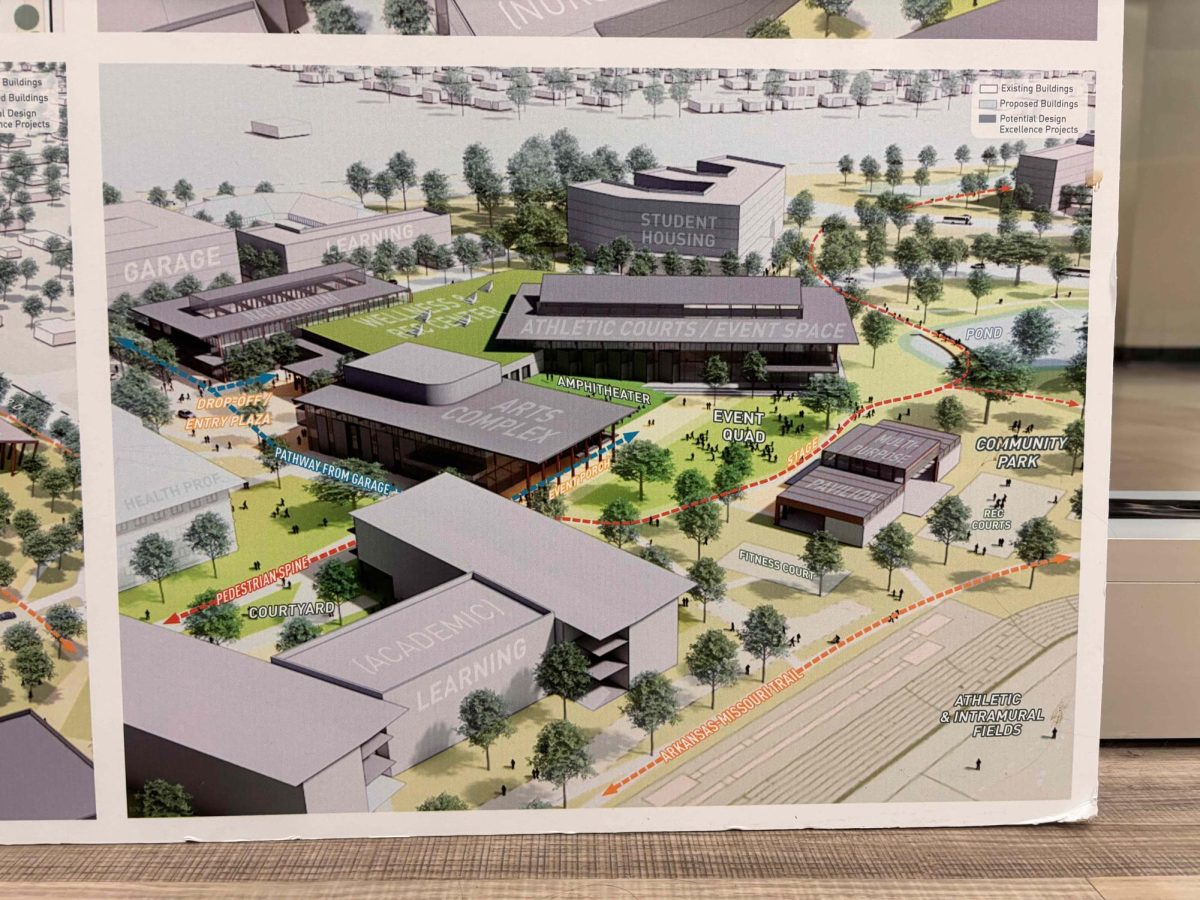
Building 23 would be the first residential complex built under NWACC’s proposed housing plan. The building would be the smallest housing project included in the larger plan, holding an estimated 300 to 400 students in about 120,000 square feet at an estimated cost of $35 million. The full housing plan, discussed in earlier studies and the campus master plan process, could eventually serve about 800 to 1,200 students.
Dr. Justin White, vice president of student affairs and strategic initiatives, presented the housing proposal and described the first phase, stating, “The financing model for the pilot project would be college-financed or self-funded.” White says, “Self-funded is the preferred path.” White also explained that the college-financed institutional debt model would give NWACC “full ownership control over the design and pricing” and keep revenue on campus for future expansion, student success initiatives, and programs. He also noted the college had the debt capacity for the project, saying, “It was an early misconception that P3 was the only way that we could do this.”
Trustees question athletics recruitment
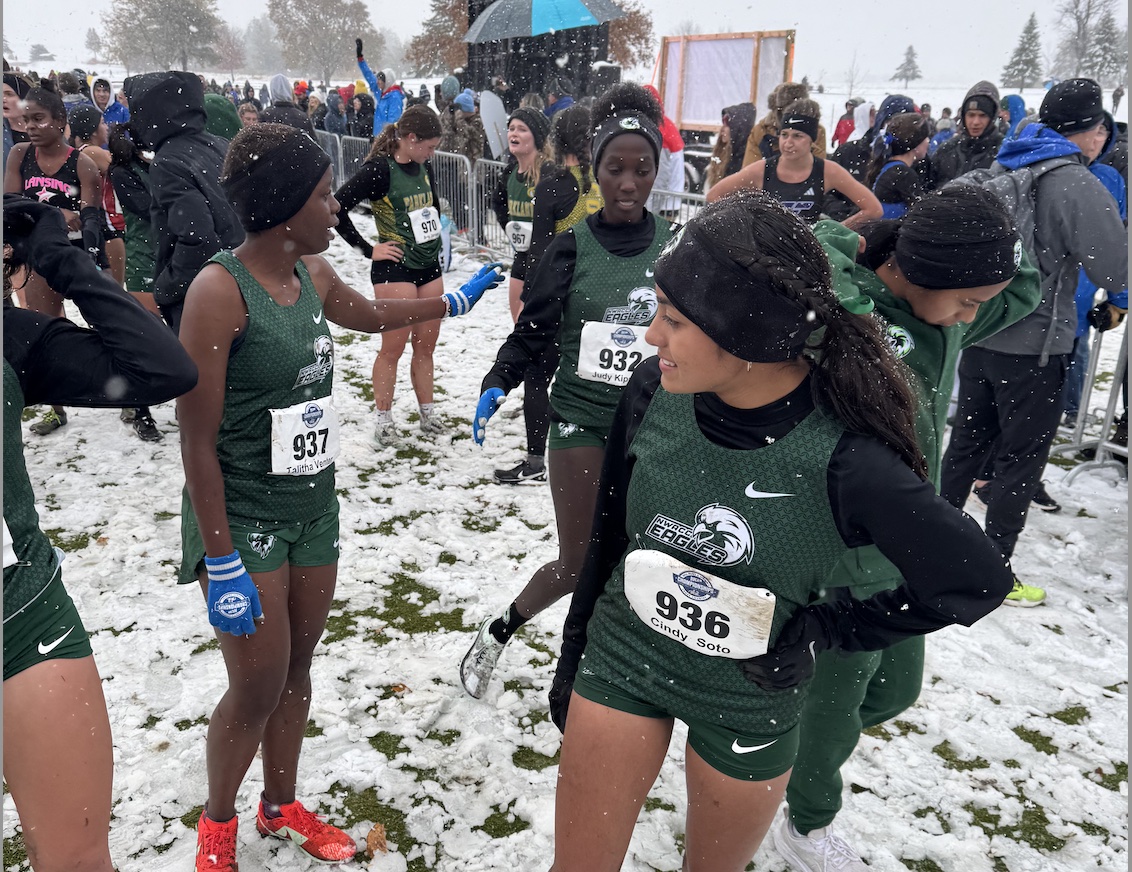
The athletics discussion centered partly on the number of international student-athletes. According to the presentation given to the board, 37% of NWACC student-athletes are international, representing 11 countries.
Trustee concerns focused heavily on whether NWACC’s athletics growth, especially international recruitment in soccer, could move the college away from its local mission. During the athletics discussion, Trustee Branscum questioned whether NWACC was “missing the boat” in serving Bentonville, Rogers, and Northwest Arkansas students, saying those local students are the ones most likely to “come back to our community.” Branscum also questioned whether NWACC should be “forsaking a win here or there” to keep the focus on local students.
Trustee Frank raised a similar concern, saying she did not want the college to move away from its mission. “I caution you to not veer away from the mission of the college,” Frank said, adding that the mission is “community.” Her comments came after a discussion of soccer’s international recruitment and the number of international students compared with students from Arkansas and nearby communities.
Trustee Joe Spivey pressed the question further, asking whether NWACC was “intentionally going out and recruiting international students.” One trustee member pointed to athletes from England, Wales, Hawaii, Japan, and Portugal and asked how they found their way to a program that was just starting, asking, “Is it because we can’t find the athletes we have to fill a team within a 100-mile radius of our campus?”
Athletics Director says local students remain a priority
Athletics Director Brooke Brewer responded that NWACC is recruiting both local and international student-athletes but emphasized that the college’s first priority remains Northwest Arkansas students. Brewer said coaches have “done a great job of attempting to recruit our local soccer athletes,” but NWACC lost “about 10” local soccer athletes who had committed before receiving more competitive offers from other institutions.
Brewer also explained that soccer is different from cross-country and track because the local developmental pipeline is newer. “Soccer was more recently approved by the high school association to even become a sport,” Brewer said, adding that fewer students have grown up playing soccer compared with more established sports. She said the soccer program is trying to address that by “integrating themselves within our local clubs” and helping bring coaching support to local clubs and high school programs.
When asked whether NWACC was intentionally recruiting international students, Brewer acknowledged the college was but said soccer’s international nature plays a role. “You see, soccer is an international sport, and so it does attract international athletes,” Brewer said. The goal is to fill rosters with students who are “a great competitive fit,” “a great academic fit” and “a great culture fit.”
Brewer rejected the idea that international recruitment represented a priority shift away from local students. “If we were recruiting our international students more heavily than we’re recruiting our Northwest Arkansas students, that would be a priority shift,” Brewer said. “We’re recruiting our Northwest Arkansas students the most heavily.” She added that local athletes have an advantage in the recruiting process because coaches can attend their games and practices and speak directly with their coaches, while international recruiting is often based on game film, agents and coach conversations.
Officials say housing would serve all students
College officials said the proposed housing would not be limited to athletes or international students. Alex Vasquez, NWACC chief of staff and executive director of public and government relations, responded on behalf of Dr. White and wrote that the college would develop a student housing plan with a selection process “built around the central requirement that students will need to be enrolled as full-time students to live on campus.”
Vasquez also wrote that the Housing Committee and college administration agreed that housing should serve multiple student groups. “Student housing needs to be for our general and local students, including student athletes, and international students.” In response to concerns that housing could make NWACC feel more like a traditional university than a community college, Vasquez said one goal is for NWACC to be a place where students want to spend time beyond classes. “We believe developing these life skills is as important for community college students as it is for traditional university students.”
In a separate response provided on behalf of NWACC President Dr. Dennis Rittle, Vasquez wrote that housing is part of the college’s response to regional growth. “Northwest Arkansas is growing and changing exponentially, and housing is becoming increasingly challenging for students in our region who want to attend NWACC,” the response said. “Providing on-campus residential student housing as part of our Campus Master Plan is one way we are seeking to be responsive to the needs of the community.”
The response on behalf of Rittle also connected athletics to NWACC’s mission. “Our sports programs are growing in demand and visibility in part because sports ignite passion and unlock potential, resulting in better educational outcomes and creating the economic mobility we desire for all our students,” the response states. “We want to see this happen for more students from Northwest Arkansas as a result of the college providing residential housing on campus.”
Recruitment staff point to local demand
Recruitment staff said student interest in housing is not limited to athletes or international students. Cameron Jones, a recruitment adviser at NWACC, said he speaks with prospective students every day and sees local demand for a stronger campus community. “Students in this area want and crave a sense of community,” Jones said. “That sense of community can be found at NWACC, and having students stay on campus would drive that sense of community.”
Jones said many incoming high school students want to move out of their parents’ homes, live on campus and “start their own adult journey,” even if they are from Benton or Washington counties and live within driving distance of NWACC. He also noted that international students would benefit from housing because many do not drive and need a stronger sense of connection on campus. “These students also need a place to live.” Jones added, “Having that sense of community for these international students would be huge and would benefit them by having the opportunity to live with fellow international and American students.”
Recruitment Adviser Emma McMichael said she understands concerns that housing could be used mostly by athletes instead of local students. However, McMichael added that many local high school students want both the security of staying close to home and the independence of moving out. “I meet a large population of high school students who are eager to have two sides of the college experience: the security of staying close to home coupled with the ability to move out and gain independence for the first time,” McMichael said. She added that on-campus housing could create “a sense of belonging for students coming from all backgrounds—local or international, athletes or non-athletes.”
Growth brings opportunity, concern
The concern raised by trustees was not whether international students belong at NWACC. Their presence, supporters said, strengthens the college by bringing different cultures, perspectives, and experiences to campus. The concern was whether NWACC’s growth could shift its focus away from the local community it was created to serve. Supporters of the college’s direction argue that athletics and housing can build community, attract students, and create more opportunities for both local and international students. Critics questioned whether that growth could make NWACC feel less like a community college and more like a traditional university. As NWACC continues to grow, the question remains: can the college expand while keeping Northwest Arkansas students at the center of its mission?
Trustees Mark Scott, Branscum, Frank, and Spivey, along with Executive Director of Athletics and Institutional Branding Brooke Brewer, did not respond to follow-up requests for comment by publication time.