














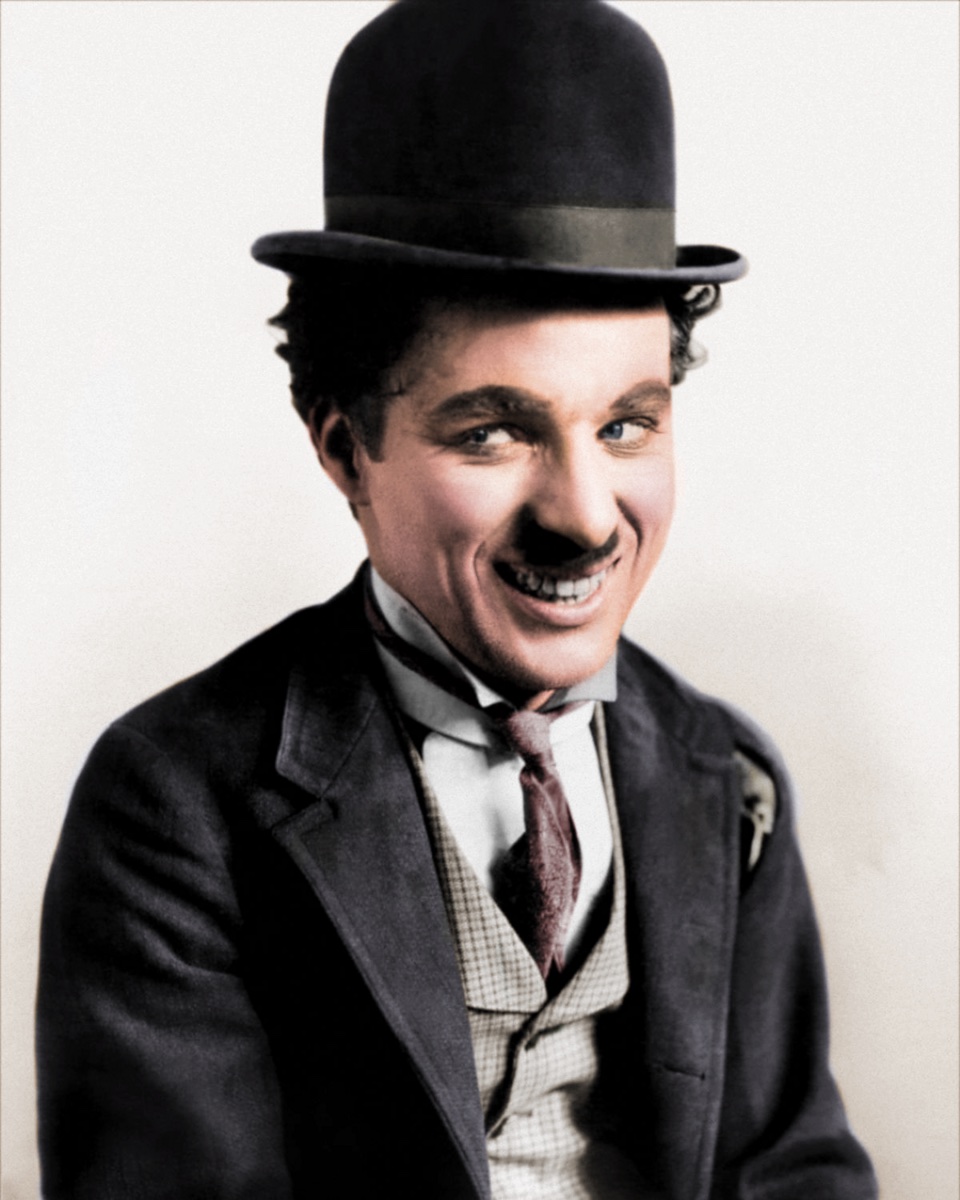


“I’m sorry, but I don’t want to be an emperor,” said Charlie Chaplin at the end of his 1940 film “The Great Dictator.” “That’s not my business.” He continued, “I should like to help everyone, if possible. We all want to help one another. Human beings are like that.” In many ways, America today seems far removed from Chaplin’s belief in humanity. Political discourse has grown harsher, compromise has become rarer, and disagreement is increasingly treated as a moral failure. In that atmosphere, Chaplin’s words do not sound like a relic of the past. They feel more relevant than ever.
Chaplin’s speech did not emerge from comfort but from a world being consumed by dictatorship, war, and dehumanization. He was speaking in the shadow of fascism, Hitler, and a Europe being torn apart by hatred and propaganda. During the Holocaust, 11 million people were murdered, including 6 million Jews. Chaplin felt this as more than a distant crisis. His half-brother Syd was Jewish from his father’s side, and Chaplin himself had long been associated with Jewish identity. His most famous character, the Tramp, was often mistaken for being Jewish. He also felt a disturbing connection to Adolf Hitler: His most famous character, the Tramp, shared Hitler’s toothbrush mustache, and Chaplin was only four days older than him. In “The Great Dictator,” Chaplin turned that eerie resemblance into defiance, using satire to mock dictatorship at a moment when much of the world had not yet fully grasped how deadly it would become. History also shows that such impulses were never limited to America’s enemies. After the attack on Pearl Harbor on December 7, 1941, the United States itself turned fear into policy, forcing approximately 120,000 Japanese Americans into incarceration camps, where official records counted 1,862 deaths. Chaplin would later learn that even in America, speaking too boldly against fear and power could make a person a target.
Chaplin’s humanism did not end with “The Great Dictator.” As the war and its aftermath reshaped the world, he became increasingly vocal in ways that made American authorities deeply suspicious. Chaplin saw himself less as a nationalist than as what he referred to as a “citizen of the world,” believing nationalism to be an obsession with one’s own country and a dangerous force that helped lead the world into war. That belief, combined with his public speeches and political outspokenness, helped make him a target. J. Edgar Hoover’s FBI compiled a massive file on Chaplin, monitored his movements, and treated one of the world’s most famous artists as a possible subversive. In Cold War America, Chaplin’s insistence on speaking as a human being first, rather than as a patriot, was enough to place him under suspicion and ultimately into exile after U.S. authorities revoked his re-entry permit in 1952.
Chaplin’s warning remains powerful because the temptations he confronted still exist. They can be seen in the urge to divide the world into patriots and enemies, insiders and outsiders, the deserving and the disposable. In that kind of climate, politics becomes less about persuasion than about punishment, and public life begins to lose its humanity. That pattern can still be seen in a political culture shaped by grievance, spectacle, and suspicion, one that rewards fear of outsiders and treats compromise as weakness. It thrives on drawing hard lines between who belongs and who does not, who is virtuous and who is disposable. In such a climate, power is no longer measured by wisdom or restraint, but by the ability to humiliate, exclude, and dominate. The language may be modern, but the moral danger is not.
That moral danger is not confined to rhetoric. It shapes policy, including war. In the current conflict with Iran, the language of strength, necessity, and national resolve has once again made it easier to speak in terms of targets, retaliation, and strategy than in terms of human cost. Yet this is exactly the kind of thinking Chaplin warned against. He understood that once power begins dividing the world into the worthy and the disposable, violence becomes easier to justify and empathy becomes easier to dismiss. War may be defended as order, security, or patriotism, but it still leaves behind shattered lives, widened fear, and suffering that no slogan can redeem. The names and circumstances may change, but the temptation is the same: to let power speak louder than conscience.
War does not remain confined to the battlefield for long. The conflict with Iran has already shown how quickly violence spreads outward, unsettling the region, disrupting energy routes, and extending fear far beyond the people who first authorize it. What is presented as a measured assertion of strength can leave behind civilian suffering, economic shock, and a wider climate of instability that reaches well beyond any single target. Chaplin understood that this is one of power’s oldest illusions: it promises control while creating consequences that no one fully controls. Once again, the human cost proves larger than the language used to defend it.
The cruelty of immigration policy is not new: a previous Democratic administration deported more than 2.4 million people, expanded family detention during the 2014 surge of Central American arrivals, and was condemned by immigrant advocates as the “Deporter in Chief” era, even though its later priorities narrowed in ways that Migration Policy Institute analysts said shielded most unauthorized immigrants from deportation. What makes the current moment feel different is not simply enforcement but its tone, scale, and theatricality: in its first year, the current administration took more than 500 immigration-related actions, ended prior limits on enforcement near protected areas such as churches and schools, and over saw a detentionn rise by more than 75 percent, while the share of ICE detainees with no criminal record rose from 6 percent in January to 41 percent by December. That shift matters because Chaplin warned against societies that turn human beings into problems, burdens, or symbols before stripping them of dignity in the name of order.
Chaplin’s faith in humanity was not naïve sentimentality but a deliberate act of resistance against the world he saw around him. In “The Great Dictator,” he insisted, “We want to live by each other’s happiness—not by each other’s misery. We don’t want to hate and despise one another.” Even after everything he had witnessed—war, dictatorship, greed, and bloodshed—Chaplin still believed that hatred was not the natural state of man, but the corruption of it. His speech acknowledges how far humanity had fallen: “Greed has poisoned men’s souls, has barricaded the world with hate,” and yet he refused to end there. “More than machinery we need humanity. More than cleverness, we need kindness and gentleness.” That may sound idealistic in a cynical age, but ordinary life still proves him right. People still comfort the grieving, shelter the vulnerable, feed the hungry, and sacrifice for those they love. Cruelty may be loud, but it is not the whole truth of human nature. Chaplin’s belief endures because, even now, there remains something in people that reaches toward one another rather than away.
Chaplin still has something to say because the world he warned against has never fully disappeared. It changes its language, its symbols, and its slogans, but it still asks people to fear more than they feel, to hate more than they understand, and to mistake domination for strength. Chaplin answered that world with something far more difficult: humanity. He believed that people were meant to live by one another’s happiness, not one another’s misery, and that conviction is what makes him more than a comedian, more than a filmmaker, and more than a man of one nation or one era. He remains, as this moment reminds us, a man of all countries. As long as public life continues to tempt us toward cruelty, his voice will continue to matter.
Keenan Addington is a reporter for the NWACC Eagle View.