











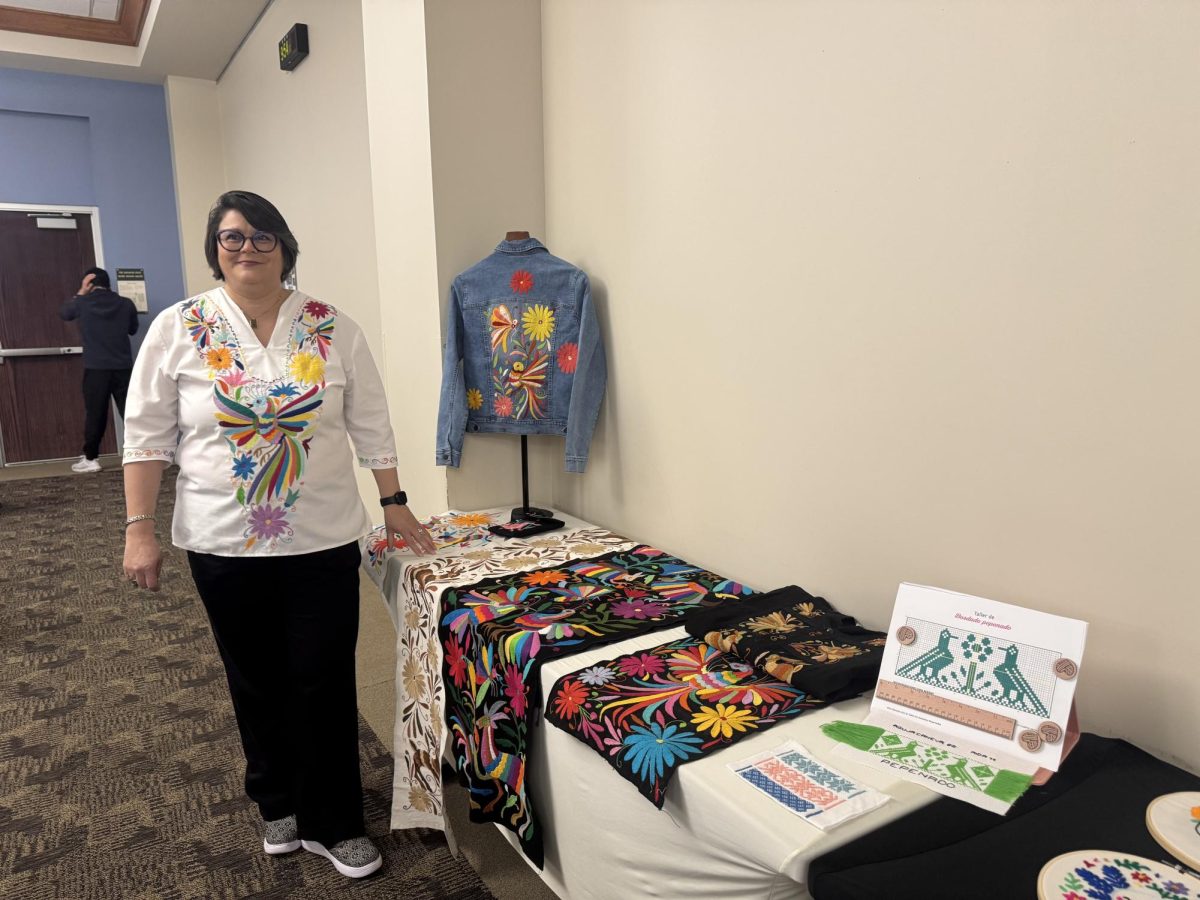
Imagine sitting between a hospital room and a waiting room during one of the most difficult moments of your life with no internet, television, or phone service to distract you. Beatriz Segura found herself in this situation about a year and a half ago while caring for her mother, who was in the ICU in Mexico.
With nothing to occupy the long hours of waiting, Segura began embroidering and crocheting again. What started as a way to pass the time during a stressful and uncertain week and a half soon became something much more meaningful. Through embroidery, Segura reconnected with a cultural practice and discovered how therapeutic the simple act of stitching could be.
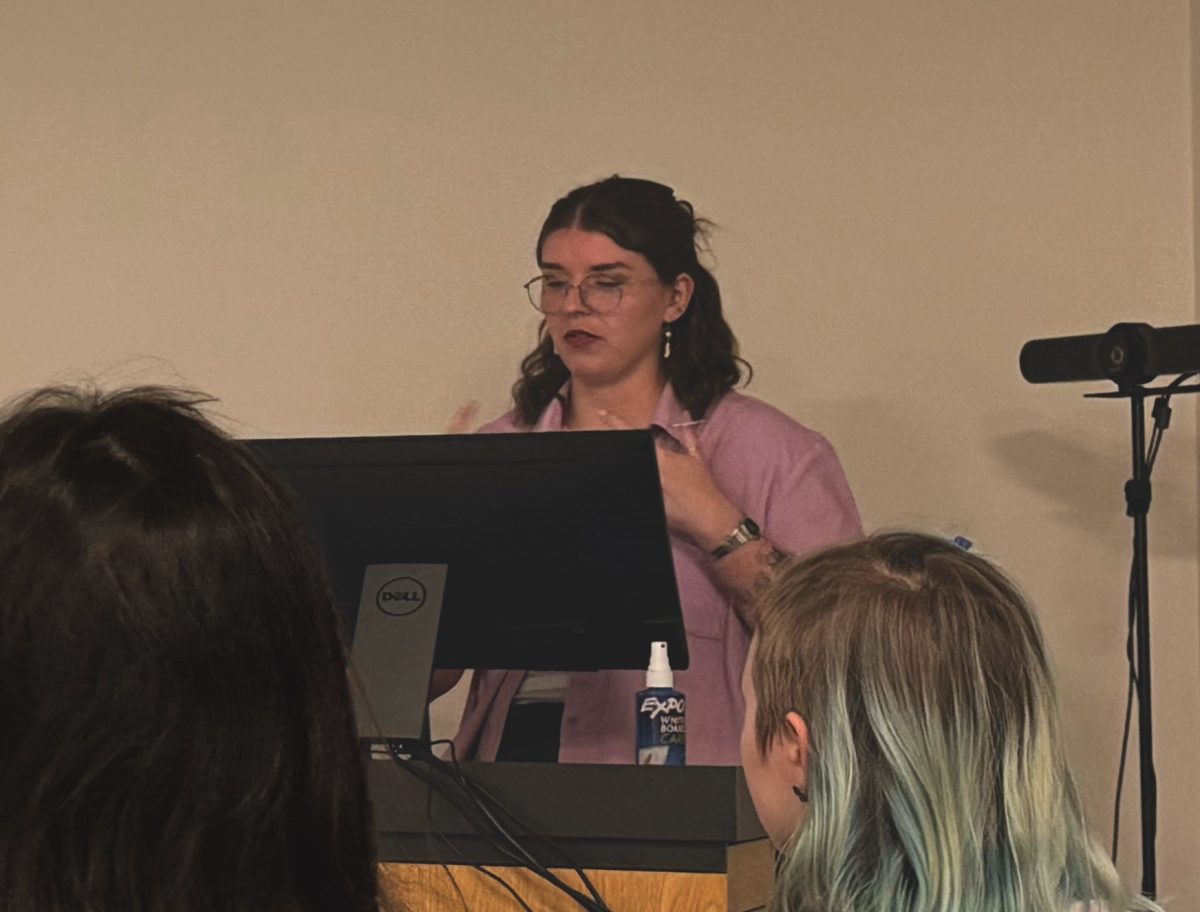
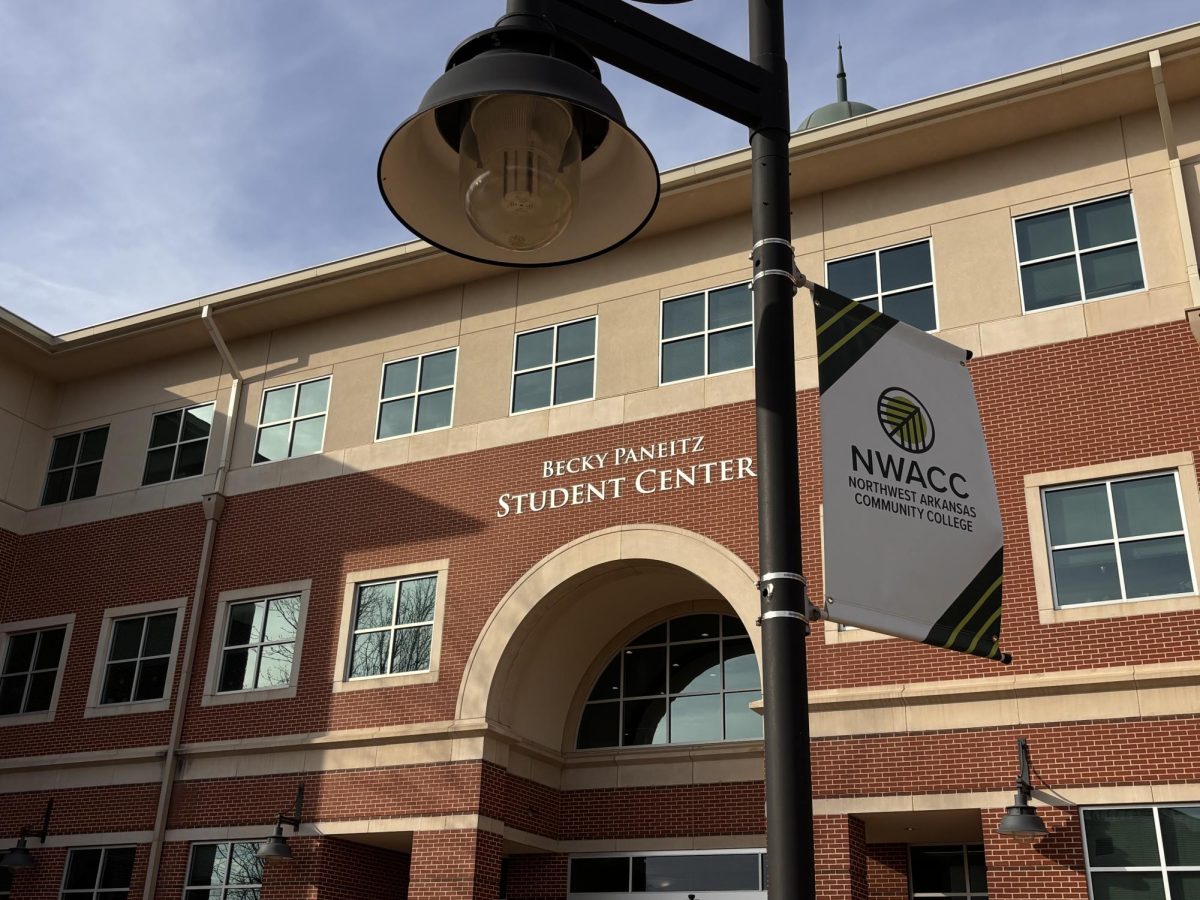
Segura shared her story during the NorthWest Arkansas Community College Spring Arts Festival from March 2-6. This year’s theme of “Connection” brought the community together to celebrate diverse arts, music, cultures, and insightful ideas.
Having lived in Northwest Arkansas for over 22 years, Segura spoke about how embroidery is deeply tied to culture, particularly in Mexico where many different styles of embroidery exist. Embroidery goes back to indigenous traditions where each ethnic group developed its own designs and techniques. Segura has learned through years of visiting Mexico, and mainly teaches three types of techniques like el Bordado Preparado, el Bordado Oaxaqueno, and Pata de Gallo.
These crafts have been passed down from generation to generation, but embroidery is becoming a lost art due to the rise in screen time among today’s youth. Segura not only stresses this art’s disappearance within coming generations, but also highlights the health benefits embroidering has to offer. This rhythmic repetition can help reduce stress, calm the mind, and build emotional resilience. Embroidery also stimulates the brain and supports cognitive benefits such as neuroplasticity, which helps the brain form new connections.
In many cultures, women embroidered clothing, linens, and household items out of necessity, but these pieces also carried artistic expression and cultural meaning. As a result, men would stray away from such forms of art as they were stereotyped as girlish activities. However, embroidery is not only about beauty; it also has functionality.
Segura gives us insight on life in Mexico saying, “When you have a pretty embroidered napkin you get to brag more,” adding, “here when you go buy tortillas you usually go to the stores and grab a bag or in aluminum foil but in Mexico you go wait in line at a tortilleria with an embroidered napkin and while you wait in line you talk about your embroidered napkin”
Another meaningful part of the event was when students and staff participated in the mini interactive lesson Segura showcased. Sharon Fox, Dean of Communication and Arts at NWACC, also participated. She took photos for the Communication and Arts School’s social media and enjoyed trying the stitches out. She was already familiar with embroidery and was natural at passing thread through fabric.
Segura’s presentation showed how something as simple as needle and thread can have powerful effects on the mind and community. Embroidery offers a way to relax, preserve culture, and connect with others. As Segura explained, “We don’t just mend fabric; we mend ourselves.” Through each stitch, embroidery reminds us to slow down, be present, and appreciate the connections we share with others.
NWACC student Sophia Ruiz contributed to this report.