





Watching the Macy’s Thanksgiving Day Parade on TV as a kid, I’d see the balloons and celebrities and think, “I wonder what it’s like to be part of the real audience—watching it in person instead of on TV. ”
In high school, I finally got the chance to find out. I performed in the parade—well, alongside around 600 other high school dancers. I’d been taking lessons at the only dance studio in our small town from Kindergarten through 12th grade. I wasn’t particularly talented—I could never develop the flexibility to raise my foot much higher than hip-level—but the studio wasn’t competitive, which worked in my favor. Our teacher, “Miss Tammie,” had been sending her dancers to the parade for years. Since competitions weren’t an option where we lived, she simply mailed in our recital videos and made her case. Somehow, it worked.
We arrived in New York the Saturday before Thanksgiving and immediately started rehearsing. I met dancers from all over the country. Coming from a town of 5,000, I assumed we’d be the sheltered ones—until a group from Michigan asked if Texans rode horses to school, and, with that settled, if we celebrated Halloween. I still think about that sometimes.
After a couple of days of practice, we hit our first major milestone: the Herald Square rehearsal. If you’ve ever watched the parade, this is where every televised performance happens. We were warned not to talk because NBC producers had to get through each act in the parade, not just us, and they would have notes to give us to change before Thursday. Usually, they’d ask us to shift our choreography or placement slightly so the camera could pan across at just the right moment.
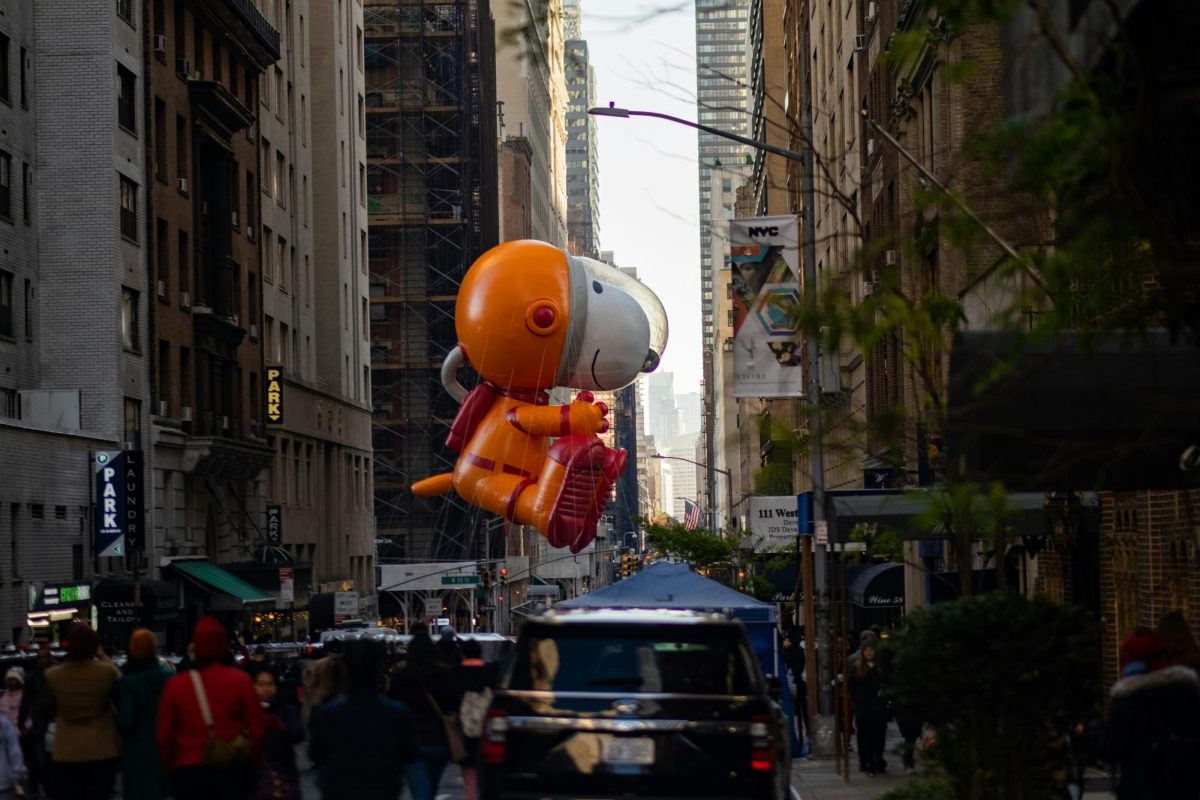
My freshman year, that was the moment it first clicked: the parade is designed around TV. The people lining the streets aren’t getting narration, celebrity introductions, or performances. They’re getting the raw experience, which sounds cooler until you’re standing in it, half-frozen, without a cell phone, watching someone with their entourage walk past a few yards away, knowing you should recognize them from something, but with no way to get any answers.
There were occasionally some surprises. In my third year, the night before Thanksgiving, our directors told us we’d been asked to serve as the audience for pre-taped Rockefeller Center tree-lighting segments. Justin Bieber was performing—this was 2011, peak-teen-heartthrob Bieber—and someone at NBC clearly realized there were 600 teenage girls staying at the Hilton Midtown who would cheer and fawn appropriately for the cameras. Tony Bennett performed first, with The Christmas Song, and ended with a warm “Happy Thanksgiving!” While it was very charming and appropriate for the day it was said, unfortunately, it wouldn’t work for the December broadcast date, so he had to sing the whole song again with the correct holiday greeting.
Parade morning came painfully early. Despite the city’s reputation for never sleeping, the streets were empty when I looked out my Midtown hotel window at 2:00 a.m. By 3:00, we were fully costumed, made up, and wedged into a subway car. The staff members kept telling us to squeeze in more people, to the point where I couldn’t reach anything to hold on to—not that it mattered, because there was physically no room for anyone to fall.
One year, our group waited for the start of the parade on the steps of the Museum of Natural History. A staff member eventually opened a side door so we could use the restrooms, which, with the museum closed and most of the lights turned off, felt like a very unofficial, very brief version of “Night at the Museum.” From our perch on the steps, we watched a few floats go by. We learned how impossible it is to identify celebrities from that distance without hearing them sing or seeing their names on a lower-third banner. Our group eventually coordinated a loud “We love you, KeKe!” to get a wave from Disney Channel star KeKe Palmer. A little while later, I recognized Neil Diamond and waved enthusiastically. He waved back at me, and I can say with confidence that his wave was to me specifically because none of the teenagers around me knew who he was, even after I explained to them. My mom is very proud of that story.
Herald Square may look like the center of the parade on TV, but it’s actually the end of the route. Once a float passes the cameras or a group performs, they keep moving off-screen to waiting cars or the nearest subway station. One year, our group opened the parade, which meant starting in Herald Square instead of miles uptown. This time, instead of lining up miles uptown, we went straight to our performance location, just a couple of hours before the parade was supposed to start. We sat on the concrete for what felt like an eternity. Our costumes were thin, we weren’t allowed coats, and the tall buildings blocked the sun. That morning remains the coldest I’ve ever been.
What became clear through all of this: what you see on TV isn’t what people in New York see. Performers only perform in Herald Square; everywhere else, the performers are just walking. Without lower-third banners or even close-ups, identifying celebrities became a futile guessing game. Even the year our group opened the parade, immediately after our performance, we were sent by subway to the starting point so we could get the full experience of walking a large stretch of Manhattan in cheap white tennis shoes.
NBC curates every second for the viewers at home—the close-ups, the commentary, the names, the angles. That’s the parade people are meant to see. Watching from home, you get climate control, a comfortable seat, and, if you’re lucky, better food. You get the full performances and the version of the event that actually makes sense.
I’m grateful I got to experience the parade from the inside—I really did enjoy it, even with the cold, the waiting, and the extremely early mornings. Not many people get that kind of opportunity. But being there also made one thing clear: this parade exists, at least in its current form, primarily for television audiences. And once I understood that, I realized I had never “missed out” on the intended experience. I’d been watching the parade exactly as it was meant to be watched—in the comfort of my home, surrounded by loved ones, and anticipating a good meal. Turns out, I’d had the best seat in the house all along.
Jennifer Watson is a journalism student at NWACC. She can enjoy this year’s parade in a warmer and more comfortable setting.
